

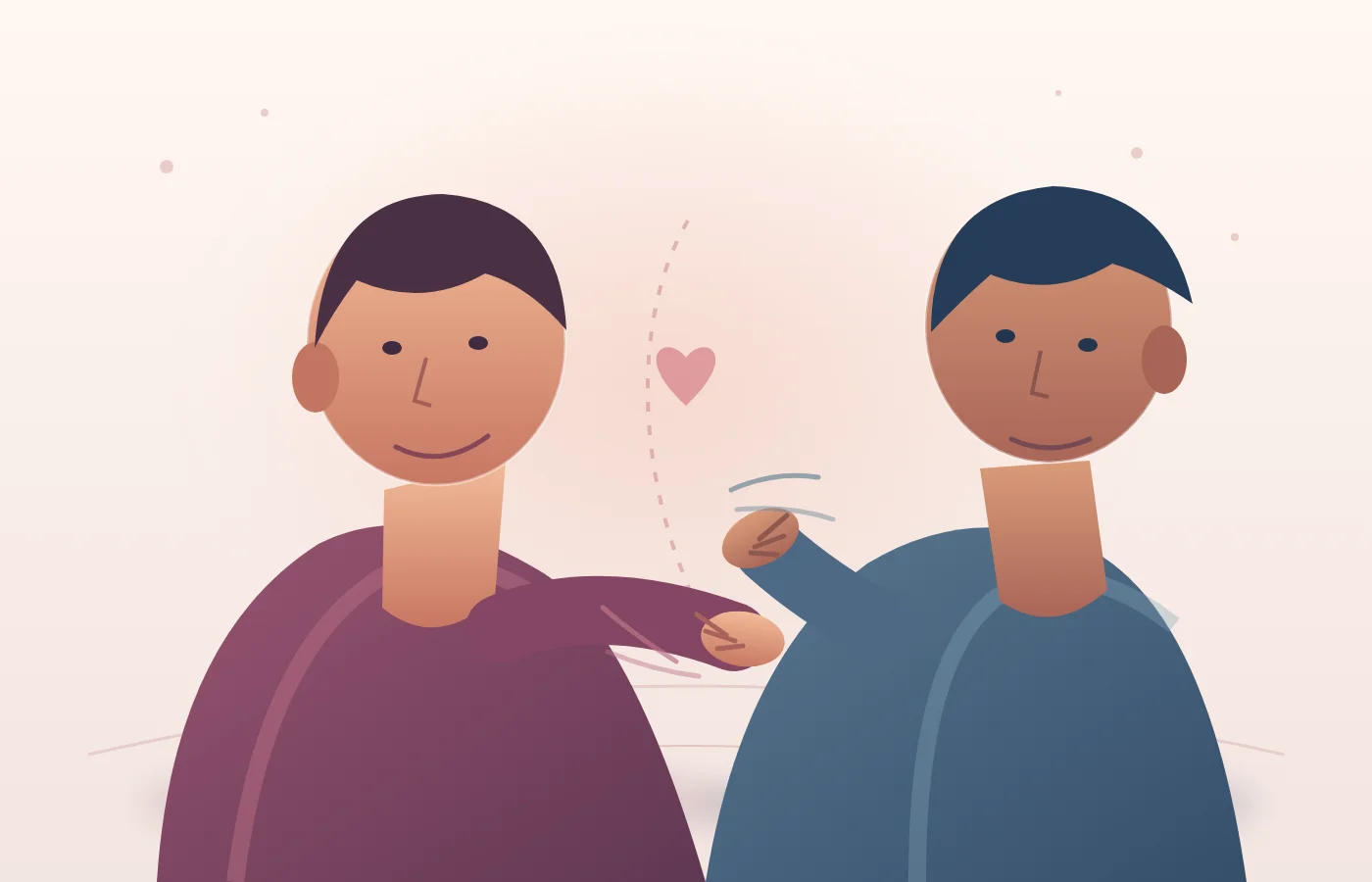
One of you reaches for reassurance. The other needs air. You text again because silence feels like danger. They pull back because intensity feels like pressure. The closer you try to get, the farther they seem to go—and the farther they go, the harder you chase. Welcome to the classic anxious avoidant relationship loop.
This article is about the pairing, not a solo attachment style. An anxious and avoidant relationship often creates a push pull relationship attachment pattern where each person’s coping strategy activates the other’s deepest fear. Understanding that dance is the first step toward changing it.
Below you will learn what an anxious-avoidant relationship is, why the push-pull starts, how it feels on each side, the common cycles couples get stuck in, what helps both people, and when the pattern has become unhealthy.
What an Anxious-Avoidant Relationship Is
Why the Push-Pull Dynamic Starts
How It Feels on Each Side
Common Cycles in the Anxious Avoidant Trap
What Helps Both People
When an Anxious-Avoidant Relationship Is Unhealthy
Frequently Asked Questions
What an Anxious-Avoidant Relationship Is
An anxious-avoidant relationship is a romantic pairing where one partner leans anxious (craving closeness, quick reassurance, and emotional contact) and the other leans avoidant (protecting independence, needing space, and pulling back when intimacy rises). The bond is not doomed by labels. The friction comes from how those two strategies collide under stress.
In everyday language, anxious attachment describes a nervous system that treats distance as threat. Avoidant attachment describes a nervous system that treats engulfment as threat. Put those together and you get a pursue-withdraw dance: closeness triggers the avoidant pull, distance triggers the anxious push, and both people feel they are reacting—not choosing.
Adult attachment research maps how people regulate closeness, trust, and dependence in romantic bonds. Patterns of protest, withdrawal, and repair are well documented; for a research overview, see this NIH/PMC review of attachment theory and research.
Treat the language as a map, not a diagnosis. People can lean more anxious in one bond and more avoidant in another. Stress, conflict history, and timing all matter. The useful question is not “Who is broken?” It is “What cycle keeps repeating when we get close?”
Dating anxious and avoidant partners is common because early chemistry can feel intense. Anxious warmth can feel flattering to someone with walls up; avoidant calm can feel stabilizing to someone who fears chaos. Attraction often arrives before the trap becomes obvious.
Why the Push-Pull Dynamic Starts
The push-pull does not usually start with malice. It starts with mismatched regulation. One person’s comfort strategy is the other person’s alarm signal.
Early on, the anxious partner may show up with enthusiasm, frequent contact, and emotional openness. That can feel exciting—until the avoidant partner’s need for breathing room kicks in. A delayed reply, a quieter weekend, or a request for space lands as rejection for the anxious partner. Their protest (more texts, more processing talks, more “Are we okay?”) lands as pressure for the avoidant partner. Pressure confirms the fear that closeness equals loss of self. Withdrawal confirms the fear that love equals abandonment. Each side “proves” the other’s story.
That is the anxious avoidant trap in one sentence: each person tries to feel safe in a way that makes the other feel less safe.
History amplifies it. If you grew up scanning for inconsistency, silence can feel like danger even when your partner is only tired. If you learned to stay self-contained, emotional urgency can feel like drowning even when they are only scared. The past is context for why ordinary moments escalate so fast—not an excuse.
Timing matters too. Hard talks after a long day, stacked complaints in one sitting, or big relationship questions during a busy week raise intensity. Intensity is fuel for the push pull relationship attachment cycle. Lower intensity and clearer structure slow the spiral—skills you can also build when you communicate your needs in a relationship without turning every ask into a crisis.
How It Feels on Each Side
Seeing both interiors reduces blame. Neither side is “the villain” in a healthy reading of the pattern—though either side can behave poorly when flooded.
From the Anxious Side
Distance feels personal. A short reply can spiral into stories about being unwanted. The body may stay activated: racing thoughts, checking the phone, replaying conversations, struggling to focus until contact returns. Closeness feels like relief; uncertainty feels like emergency.
The anxious partner often believes: “If I can just explain how I feel clearly enough, they will come closer.” When explanation meets withdrawal, shame and panic rise. Protest can look like criticism, tears, repeated check-ins, or testing (“If you cared, you’d answer faster”). Underneath is usually a bid for safety, not a desire to control.
From the Avoidant Side
Intensity feels like loss of autonomy. Long emotional talks, urgent tones, or expectations of constant availability can register as engulfment. The body may shut down: blank mind, urge to leave the room, sudden fatigue, or a strong need to “deal with this later alone.” Space feels like regulation; pressure feels like threat.
The avoidant partner often believes: “If I can just get some air, I will be able to show up better.” When air meets chase, they may go colder, quieter, or more logical. Withdrawal can look like stonewalling, changing the subject, or minimizing feelings. Underneath is often a bid for control over overwhelm, not a lack of care.
Both people can love each other and still terrify each other. That paradox is why the anxious and avoidant relationship feels so addictive and so exhausting at once.
Common Cycles in the Anxious Avoidant Trap
Most couples in this pairing recognize at least a few of these loops. Naming the cycle is often more useful than naming each other’s character.
1. The Chase After Silence
Partner A needs space after conflict. Partner B floods with messages to close the gap. Partner A goes quieter. Partner B escalates. By the time they reconnect, both are exhausted and the original issue is buried under the chase.
2. The Closeness Hangover
A tender weekend or deep conversation brings real intimacy. Shortly after, the avoidant partner pulls back to “reset.” The anxious partner interprets the reset as regret. Protest begins. The intimacy that felt good becomes evidence that closeness is unsafe.
3. The Reassurance Treadmill
The anxious partner asks “Are we okay?” The avoidant partner says yes, then feels managed. The anxious partner senses the flat tone and asks again. Reassurance becomes a product that never lasts long enough for either person.
4. The Fight-Then-Freeze
Conflict spikes. Voices rise. One partner (often the avoidant) freezes or exits. The other escalates to force engagement. Neither gets repair. The next day may look “fine” on the surface while emotional residue stays unresolved—sometimes showing up later as signs of emotional disconnection in a relationship.
5. The Idealize-Then-Doubt Swing
When distance grows, the anxious partner idealizes the avoidant partner and works harder. When closeness returns, the avoidant partner may feel trapped and spot flaws. Attraction and devaluation trade places, keeping both people off-balance.
6. The Scorekeeping Loop
Each side collects proof. “You never initiate.” “You never give me space.” Evidence piles up. Conversations become courtroom drama instead of repair. Scorekeeping hardens the trap because both people stop listening for vulnerability and start listening for ammo.
If these cycles sound familiar, you are not uniquely broken. You are in a predictable system. Systems can change when both people change their moves—not only their explanations.
What Helps Both People
Healing an anxious avoidant relationship is less about one person becoming the other’s therapist and more about rewriting the dance. Progress usually looks like smaller, steadier shifts: less chase, less disappearance, faster repair, clearer agreements.
1. Name the Cycle, Not the Enemy
Try: “We are in our push-pull again. I reach, you retreat, then we both feel worse.” Pattern language lowers shame. Character language (“You’re too needy” / “You’re cold”) raises defense. Shared naming makes the cycle the problem instead of each other.
2. Build Emotional Safety on Purpose
Safety for the anxious partner often means predictable contact and warm repair after rupture. Safety for the avoidant partner often means choice, pacing, and no ambush processing. Couples who improve learn to offer both: reliability without engulfment, space without abandonment. That balance is the heart of creating emotional safety in a relationship.
3. Agree on Space With a Return Time
Space without a bridge feels like rejection. Space with a plan feels like regulation. Example: “I need thirty minutes to cool down. I’ll come back at 8 and we can talk for fifteen minutes.” The anxious partner practices waiting with a timeline. The avoidant partner practices returning, not vanishing.
4. Shrink the Ask, Then Follow Through
Big emotional audits overwhelm avoidant partners and leave anxious partners still hungry. Start smaller: one check-in, one topic, one clear need. Follow-through beats intensity. Consistency teaches the anxious nervous system that contact will return and teaches the avoidant nervous system that closeness will not swallow them.
5. Soften Startups and Stay on One Topic
Lead with care, then the issue. “I care about us, and I felt lonely when we didn’t talk after the argument” lands better than “You always shut me out.” One theme at a time prevents the pile-on that triggers shutdown and the protest that follows it.
6. Meet Midway on Contact Rhythms
Negotiate realistic rhythms: how often you text during the day, how you reconnect after busy stretches, what a goodnight looks like. Dating anxious and avoidant partners works better with explicit agreements than with unspoken hopes. Write the rhythm down if needed. Clarity reduces mind-reading.
7. Practice Self-Soothing Before Protest or Exit
Anxious partners can pause before the third text: breathe, walk, journal, call a friend. Avoidant partners can pause before the hard exit: name “I’m overwhelmed,” offer a return time, then take the break. Self-regulation is not selfish. It keeps the relationship from becoming the only thermostat.
8. Repair Fast and Briefly After Misses
You will still miss. Repair matters more than perfection. Short, warm ownership works: “I chased too hard. I’m sorry.” Or: “I disappeared without a plan. That wasn’t fair.” Long speeches about attachment theory mid-fight rarely help. Clean repair does.
9. Grow Supports Outside the Bond
Friends, therapy, movement, hobbies, and solo downtime reduce urgency. A fuller life often makes the push-pull quieter because neither person uses the relationship as their only regulator.
10. Get Help When the Loop Is Stuck
Couples therapy that targets pursue-withdraw cycles can help you practice new moves in real time. Individual therapy helps each person understand triggers without making the partner the sole project. Seeking help is strength, not failure.
When an Anxious-Avoidant Relationship Is Unhealthy
Not every push-pull pairing is abusive, and not every hard season means you should leave. Still, some patterns cross from “challenging attachment dance” into harm.
Watch for chronic contempt, name-calling, or humiliation framed as “just honesty.” Watch for stonewalling that lasts days or weeks with no return plan. Watch for coercive control: monitoring, punishing independence, or using attachment labels as weapons. Watch for a partner who refuses any accountability while demanding endless accommodation.
Also watch your body. Persistent dread before contact, shrinking your personality to keep the peace, or feeling more alone inside the relationship than outside it are serious signals. Growing signs of emotional distance in a relationship that never repair—despite clear asks and good-faith effort—matter more than whether you can name the styles correctly.
Compassion for someone’s attachment lean does not mean accepting loneliness as a lifestyle. You can understand the trap and still decide the cost is too high. Healthy change needs two willing people—one person cannot carry repair alone forever.
If you are unsafe, isolated from support, or dealing with threats, prioritize safety and professional help over attachment education. Style language is a tool for mutual growth, not a reason to stay in harm.
Frequently Asked Questions
What is an anxious avoidant relationship?
It is a pairing where one partner tends to seek closeness and reassurance under stress while the other tends to seek space and independence. The mismatch often creates a push-pull dynamic: pursuit meets withdrawal, withdrawal meets more pursuit, and both people feel misunderstood even when they care.
Why does the anxious avoidant trap feel so intense?
Because each person’s coping strategy activates the other’s core fear. Distance alarms the anxious partner. Intensity alarms the avoidant partner. The chemistry can feel magnetic early on, then exhausting once the cycle locks in. Intensity is often anxiety plus withdrawal, not proof of destiny.
Can an anxious and avoidant relationship work long term?
Yes, when both people take ownership of their side of the cycle. Progress looks like predictable contact, space with return times, softer startups, faster repair, and less scorekeeping. Labels alone do not fix anything. New behaviors and emotional safety do. Some couples grow toward more security together; some discover the fit is too costly.
What is a push pull relationship attachment pattern?
It is the pursue-withdraw loop common in anxious-avoidant pairings. One partner pushes for connection; the other pulls for autonomy; both feel justified; neither feels safe. Breaking it means changing the moves—pausing the chase, returning after space, and repairing without courtroom energy.
How do you stop the chase without giving up on the relationship?
Replace chase with agreements. Ask for a conversation with a time and topic. Use one clear need instead of a flood. Accept short space if a return time is set. Stay warm, not silent-punishing. Self-soothe while you wait. Stopping the chase is not abandoning yourself—it is refusing to feed the spiral while still requiring a relationship that includes you.
Is dating anxious and avoidant partners always a bad idea?
No. Many caring people lean this way under stress. What matters is willingness to learn the cycle, communicate needs clearly, and build safety for both closeness and autonomy. Attraction without accountability becomes the trap. Attraction with mutual effort can become a growth path.
An anxious-avoidant relationship is hard because it pits two survival strategies against each other inside the same bond. When you see the push-pull as a shared system—not a verdict on who loves more—you gain room to choose different moves. Name the cycle. Soften the start. Space with a return. Repair quickly. Protect your dignity. That is how the trap loosens, one steadier interaction at a time.