
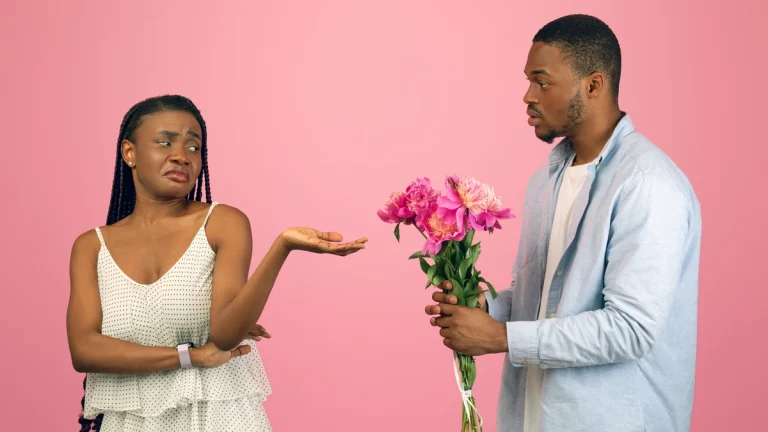
Are you feeling like you're being taken for granted? unbalanced effort can sometimes feel empty without a thank you here and there, even from your own partner. Feeling unappreciated in a relationship doesn't usually arrive as a single moment of clarity. Spotting the signs your partner doesn't appreciate you isn't always that simple!
It builds quietly, in a series of small things that each seem too minor to make a case about. A piece of effort that went unacknowledged. Something you did that went unnoticed. A moment where appreciation could have been expressed and simply wasn't. Nothing dramatic enough to name out loud. Just a slow accumulation of the feeling that what you bring to this relationship isn't really being seen.
From the outside, everything can still look completely intact. Still together. Still talking, still spending time together, still functioning in all the expected ways. But from the inside, something has started to feel off in a way that's hard to articulate but increasingly impossible to ignore.
You start to feel taken for granted. Like your effort has been absorbed into the baseline expectation of who you are and what you do. Like it only gets noticed if it stops happening. And over time, that feeling starts to change how you show up. You give a little less. Or you keep giving, but with a low hum of quiet resentment underneath it that never quite goes away.
Because appreciation isn't optional in a relationship. It's part of what keeps the connection genuinely alive. Without it, something important starts to wear down gradually.
According to The Gottman Institute, feeling valued and appreciated is a key component of long-term relationship satisfaction and emotional connection.
Why Feeling Unappreciated Happens
Feeling unappreciated in a relationship is rarely caused by one clear event.
It tends to build from patterns that developed gradually over time. Effort that started as something meaningful but became routine. Contributions that stopped being noticed because they became expected as a given. Small everyday moments where acknowledgment could have shown up but didn't. None of those individually feel like a significant problem. Together, they create a particular kind of invisible feeling that's hard to name but very real to experience.
Sometimes the underlying issue is communication. Appreciation may genuinely exist, but it's not being expressed clearly or with any real frequency. This connects closely to signs of poor communication in a relationship, where the feeling isn't the problem so much as the gap between what's felt and what actually gets expressed.
Sometimes it's about emotional disconnection. When closeness weakens, gratitude and recognition often fade alongside it. The relationship becomes more functional than emotionally attentive. This is why feeling unappreciated so often overlaps with signs of emotional disconnection in a relationship, because when the emotional layer thins, appreciation tends to be one of the first things that disappears from day-to-day interactions.
And sometimes it comes from a real imbalance in effort. One person carrying more, giving more, showing up more, while the other gradually becomes less aware of what that effort actually involves or costs. Whatever the specific cause, the result tends to feel the same. A quiet, persistent sense that what you give to the relationship isn't being fully seen or valued in return.
7 Signs Your Partner Doesn't Appreciate You
1. Your Efforts Go Unnoticed
You do things that matter. You show up, support, contribute, and make consistent effort to keep the relationship working and feeling good. But those efforts rarely get acknowledged in any meaningful way.
The frustrating part isn't just that you don't hear "thank you." It's the feeling that your effort has become expected rather than appreciated. Like it's part of the assumed infrastructure rather than something you actively chose to give. And the clearest version of this feeling usually hits when you realize that your effort would only be noticed if it stopped happening, not while it's present.
2. You Feel Taken For Granted
This is probably the most recognizable sign, and it's also one of the more painful ones to sit with.
Your presence, your reliability, your care, your effort, it all starts to feel assumed rather than valued. The relationship operates on the unspoken premise that you'll always be there, always doing what you do, without ever really needing acknowledgment for it. And that assumption, even if it's not intentional, becomes draining in a way that builds slowly and doesn't resolve on its own.
3. Appreciation Is Rare Or Superficial
When appreciation does happen, something about it doesn't quite land.
It feels automatic rather than genuine. A reflexive "thanks" that gets said without much behind it. A response that sounds more like a habit than an actual recognition of what you did or how it made a difference. The words are technically there, but the emotional substance behind them is mostly absent. And that gap, between the words and the feeling, is often harder to name and easier to feel.
4. You Start Doing Less
At some point, the giving starts to adjust itself.
You stop putting in the same level of effort you used to. Not because you've stopped caring about the relationship, but because continuing to give at full capacity when it goes consistently unrecognized starts to feel pointless in a very quiet way. That pullback isn't a deliberate strategy. It's a natural response to not feeling valued, and it tends to happen gradually without either person fully registering it until the shift is already noticeable.
5. You Feel Resentment Building
There's a particular kind of frustration that comes from unmet appreciation, and it doesn't announce itself clearly at first.
You start noticing irritability over things that wouldn't have bothered you before. Small things feel disproportionately annoying. Minor moments carry more emotional weight than they should. But the small things aren't really the issue. They're just the surface where a deeper, unaddressed frustration keeps showing up. The resentment doesn't come from nowhere. It comes from effort consistently going unrecognized over time.
6. You Don't Feel Seen
This one goes deeper than specific actions.
It's not just that certain things you do aren't being acknowledged. It's a more pervasive sense that your partner doesn't really see you, your effort, your emotional investment, what you consistently bring to the relationship. That lack of recognition creates its own kind of distance. Not dramatic distance, but the quiet kind where you start to feel less fully present in a relationship you're still technically participating in.
7. You Start Questioning The Relationship
When the feeling has been building long enough and nothing has shifted, the questions start.
You find yourself wondering whether this relationship is actually giving you what you need. Whether this imbalance is something temporary or something more deeply embedded in how this relationship functions. Whether the dynamic can change or whether this is just how things are. Those questions don't come from nowhere. They come from something real that's been accumulating, and they deserve to be taken seriously rather than pushed aside.
What To Do If You Feel Unappreciated
Recognizing the feeling is the necessary first step. But what you actually do with it is what has a chance of changing things.
1. Communicate It Clearly
Waiting for your partner to notice the pattern on their own is rarely an effective strategy.
Say it directly. Calmly, clearly, and without blame. This connects directly to how to communicate your needs in a relationship, because giving your partner the information they need to actually do something different is what makes real change possible. They can't respond to something they haven't been told.
2. Be Specific About What You Need
Saying "I don't feel appreciated" is a true statement, but it's hard to act on in a concrete way.
Specific examples make a real difference. What kinds of things go unnoticed? What would actually make you feel more valued? The more specific you can be, the easier it becomes for your partner to understand what's missing and what would genuinely shift the dynamic. Vague feedback rarely produces meaningful change.
3. Notice How They Respond
Pay attention to how your partner responds once you've said something.
Are they open to hearing it? Defensive? Do they acknowledge what you've shared and show willingness to adjust? Or do they dismiss it? The quality of that response tells you more about whether this pattern can actually change than anything else could. One conversation isn't a verdict, but the response is genuinely informative.
4. Rebalance The Effort
If you've been consistently over-giving while the other person remains largely unaware of it, adjusting that can serve a real purpose.
Not as punishment or as a test, but as a natural way to restore a more balanced dynamic and observe how the relationship actually responds when the weight shifts. Sometimes over-giving has become invisible to both people, and changing the pattern is the clearest way to make it visible.
5. Work On Connection Together
Appreciation tends to be more naturally present in a relationship that feels genuinely connected.
When emotional closeness fades, gratitude and recognition often go with it. This is where how to reconnect in a relationship becomes relevant, because appreciation grows more naturally in the context of a relationship that feels emotionally alive rather than purely functional.
6. Strengthen Communication And Listening
Feeling unappreciated is often closely tied to how communication is being received, or not being received, in the relationship.
Working on how to feel heard in a relationship can significantly shift the dynamic when both people genuinely engage with it. Because part of feeling appreciated is feeling like what you bring and what you say is being actually received rather than glazed over.
7. Look At The Pattern Honestly
If you've communicated clearly, made real effort, and the dynamic still hasn't shifted in any meaningful way, that's important information.
It may not be about one difficult conversation or one specific incident. It may be about a pattern that isn't capable of changing, or that the other person isn't willing to change. And that honest assessment, as uncomfortable as it is, matters more than continuing to hope that things will eventually shift on their own.
Frequently Asked Questions
Why do I feel unappreciated in my relationship?
Usually because there's a genuine gap between the effort you're consistently putting in and the recognition you're receiving for it. That gap can come from communication patterns that don't express appreciation well, from emotional disconnection that's been building over time, or from a real imbalance in the effort and energy each person brings to the relationship.
Is it normal to feel unappreciated sometimes?
Occasionally, yes. Relationships go through stretches where both people get caught up in life and appreciation gets expressed less than it should. But when the feeling becomes a consistent and persistent experience rather than a temporary one, it's worth addressing directly rather than waiting for it to resolve on its own.
Can a relationship improve if I feel unappreciated?
Yes, genuinely. When both people are willing to communicate honestly about what's missing and make real adjustments to how they show up, appreciation can grow significantly. The key factor is usually mutual willingness. When both people are engaged with it, things can shift. When only one person is trying, the improvement tends to be limited and temporary.